




In this guide
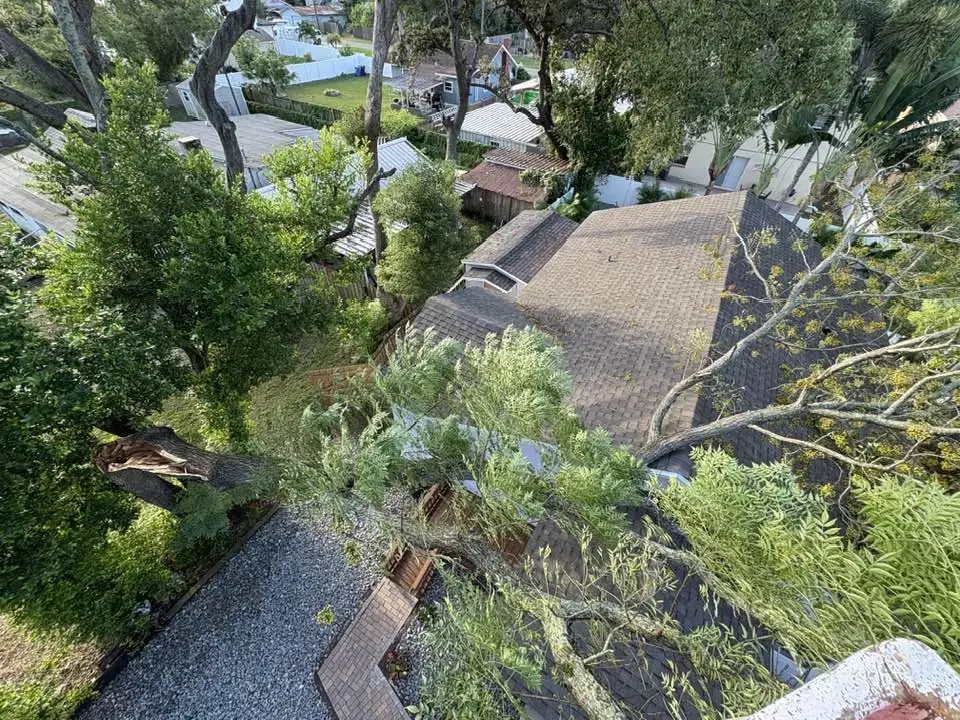
What should you do first when a tree falls?
Get everyone out from under it and away from any wire. UF/IFAS Extension calls storm cleanup extremely dangerous, even for professionals, and tells you to look up, down and around for broken limbs still caught overhead.
Who do you call, and in what order?
- Emergency services, if anyone is hurt or a downed line is live.
- Your power company, for any tree on a line. In Tampa, the City of Tampa sends residents to Tampa Electric.
- Your insurance company, as soon as you can. The Florida Department of Financial Services says to report a claim as soon as possible, and warns that a big storm can slow the adjusters.
- A tree crew, to get the tree off and stop more damage. Heights Tree Service takes storm calls 24/7.
Who pays when your own tree hits your house?
Your homeowners policy, in most cases. The Florida Department of Financial Services says most policies cover debris and tree removal if the downed tree damaged insured property. It adds that there are usually limits on what the company will pay, so the removal can cost more than the policy pays toward it.
Read two lines in your own policy: the debris and tree removal limit, and your deductible. Policies vary between insurers, and the department tells owners to refer to their own contract.
Who pays when a neighbor's tree hits your house?
Usually your own policy again. The department's wording on tree removal says coverage applies "regardless of who owns the tree." Its storm FAQ takes the mirror case, a tree from your yard falling on a neighbor's home in a hurricane. It says the neighbor's own policy covers the house unless you are legally liable, and that "normally, to be legally liable, you must be negligent."
UF/IFAS Extension in Hillsborough County describes the Florida guideline as turning on the tree's health: the owner is responsible when a dead tree falls and causes damage, and the adjoining owner bears it when a live tree falls. The same page says Florida case law is not entirely settled, above all for hazardous trees that aren't yet dead. If a neighbor's tree caused real damage and the facts look like neglect, talk to your insurer or a Florida attorney.
Who pays when a tree falls and hits nothing?
Usually you do. The department says there is usually no debris removal coverage if the tree fell on the ground and did not damage covered property. It notes one exception some policies carry: removal when the downed tree blocks the main entrance to the property. A trunk across the driveway is worth a call to your insurer before you pay for anything.
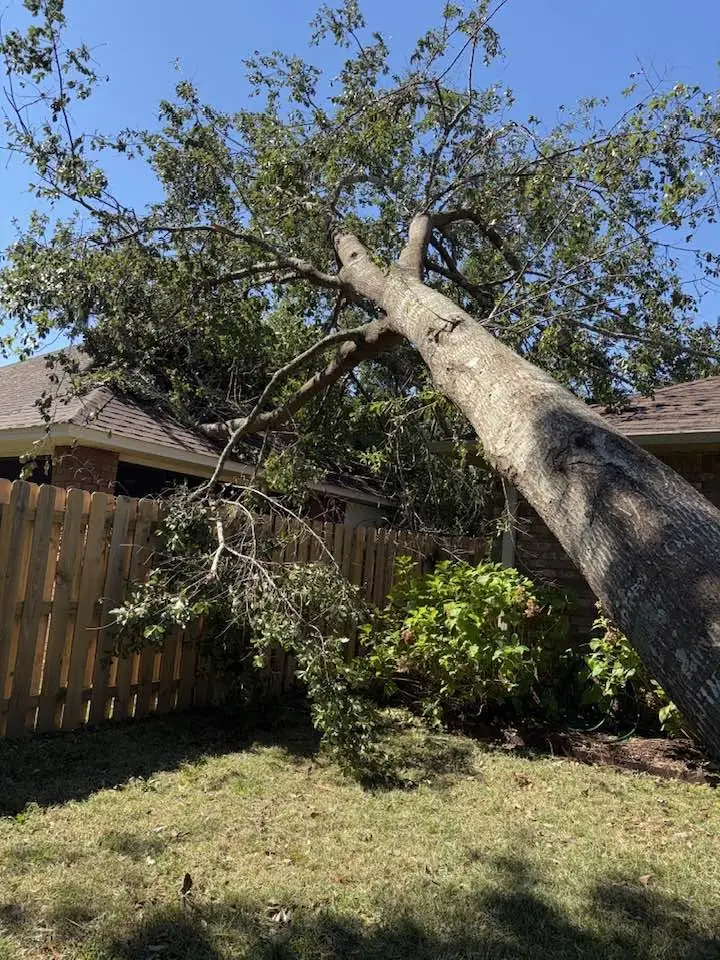
What about a tree that came from public land?
Report it instead of paying to clear it. Inside the city, the City of Tampa takes reports of limbs blocking a public street or right of way. In unincorporated Hillsborough County, the county takes service requests for street trees it maintains. The emergency tree service page sets out who handles what on a storm night.
What should you photograph for the claim?
Take pictures before anything moves, if you can do it from a safe spot. The department says it is always a good idea to take photos of the damage before temporary repairs, and that you should keep all receipts for materials. It also says not to dispose of damaged property until the company has completed an inspection.
- The whole tree and what it landed on, from far enough back to show both.
- The damage up close: roof, fence, car or pool cage.
- The base of the tree, where it broke or uprooted.
- Any wood you can see that looks hollow or rotted, since a claim may turn on it.
You must also protect the house: the department says your insurance contract requires temporary repairs to prevent further damage. Keep the invoice for the tree work with your other receipts.
What does the crew do on a fallen tree?
David reads how the tree is lying and gives you the price before any work starts, so you have a number to take to your insurer. Then the crew takes the tree off in pieces, and every branch and log leaves with them. In February 2026 David sat through a two-day tree knowledge and insurance billing class in Atlanta, and his post that week thanked the people who ran it. Your insurer still decides what it pays.
Want a firm number for your tree?
Text David a photo and you'll have it before any work starts. The evaluation is free.
Can you lower the odds of a dispute before the next storm?
Yes, and it starts with knowing your trees. UF/IFAS Extension says it is a landowner's responsibility to make sure the trees on their property are safe. The department notes that insurers look at maintenance on an inspection, trees with dead limbs near the home among them.
If a neighbor's tree worries you, talk first. In unincorporated Hillsborough County, the county says you may also submit a code violation request so staff can look at a tree you believe is dangerous. Heights' free tree evaluation covers your own trees.
More questions
How much does insurance pay for tree removal?
That depends on your policy. The Florida Department of Financial Services says there are usually limits on debris and tree removal and tells owners to read their own contract. Look for the limit on your declarations or in the debris removal section, and ask your agent if you cannot find it.
Will my homeowners insurance cover preventative tree removal?
The department's page describes coverage for a downed tree that damaged insured property, and says there is usually none for a tree that hit nothing. It does not describe coverage for a standing tree you choose to remove. Ask your agent before you count on it.
Does insurance cover a tree blocking my driveway?
It might. The department says some policies provide debris and tree removal when the downed tree blocks the main entrance to the property. Call your insurer, and photograph the tree across the drive before anyone moves it.
Sources
- Florida Department of Financial Services, Homeowners Insurance Overview: Debris and Tree Removal (read through the Internet Archive copy of October 26, 2026). Read .
- Florida Department of Financial Services, General Insurance Coverage FAQs (read through the Internet Archive copy of March 12, 2026). Read .
- UF/IFAS Extension Hillsborough County, Know Your Rights and Responsibilities: Trees on Property Lines. Read .
- UF/IFAS Extension, Assessing Hurricane-Damaged Trees and Deciding What to Do (FOR-117). Read .
- UF/IFAS Extension, Is my tree safe? Recognizing Conditions that Increase the Likelihood of Tree Failure (ENH1246). Read .
- City of Tampa, Tree Information (tree protection, permits and the Florida statute exception). Read .
- City of Tampa, Fallen or Low Overhanging Tree Limbs and Tree Down. Read .
- Hillsborough County, Tree Resources (removal, pruning, street trees and dangerous trees). Read .
- Hillsborough County, Development Services FAQs (tree sizes, dead trees, pruning limits, grand oaks). Read .
A guide, not legal advice. Rules and fees change; check with your city or county before work starts.