


In this guide
What does lightning do to a tree?
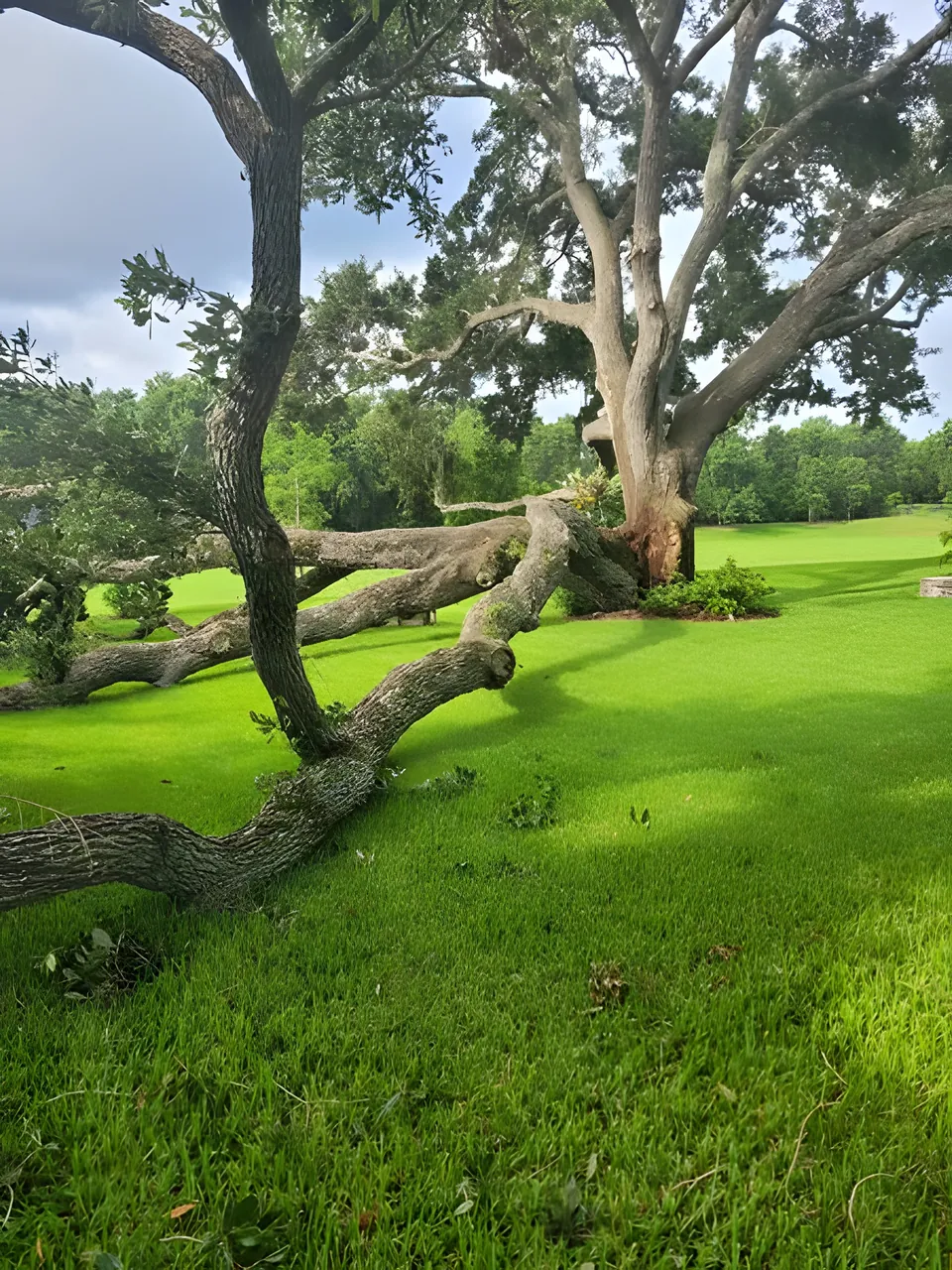
It heats the tree from the inside. Alabama Cooperative Extension says lightning can carry up to 100 million volts and reach 50,000 degrees F, which boils water and sap into steam and makes bark and wood fibers explode. The path varies: a strike can run from the top of the tree to its roots, skip down through branches or touch only part of the trunk.
Tall trees standing alone draw the most strikes, since they sit closest to the storm and the moisture inside them conducts. UF/IFAS reminds Floridians that the charge can travel down the trunk into the root system and spread through the ground, which is why you never shelter under a tree.
What are the signs a tree was struck?
Nebraska Extension lists the common ones:
- Bark damage, from a narrow strip blown off the trunk to a tree stripped bare.
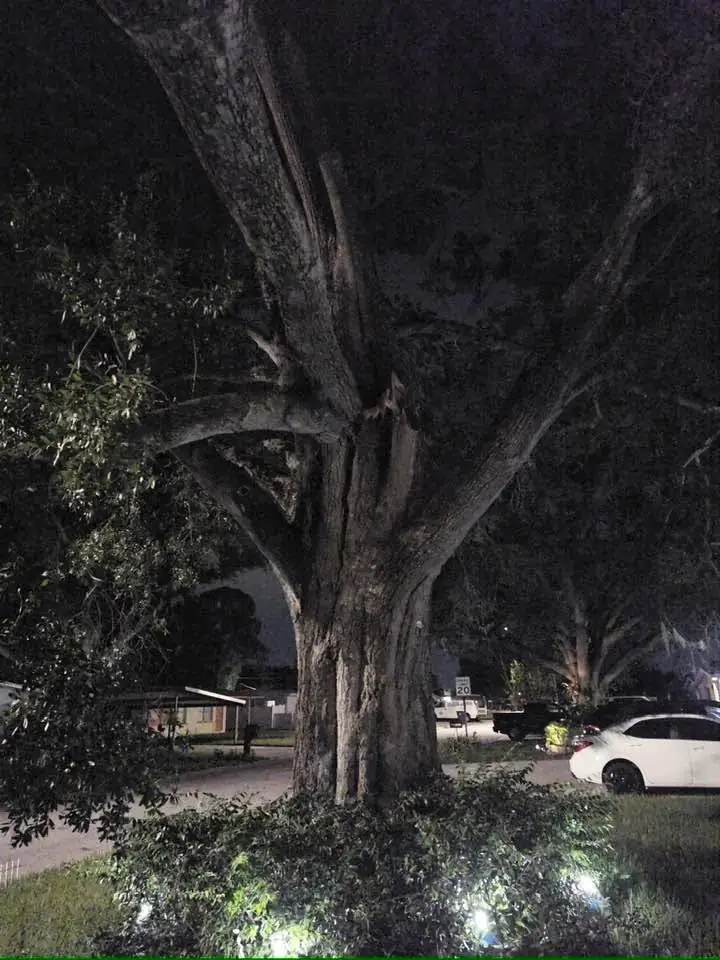
- Deep vertical cracks in the branches or trunk.
- A severely split branch or trunk.
- Nothing you can see at all, because the discharge can damage the inside of the trunk or the roots.
That last one is the hard part. Florida has a daily summer thunderstorm season, as UF/IFAS puts it, and a struck tree can look fine for weeks. Note the date of the storm, and take a photo of the tree that week so you can compare the crown later.
Will a lightning-struck tree die?
Some do and some don't, and no one can tell you on day one. Alabama Extension says no fixed guidelines exist for a tree's chance of surviving, and calls managing the damage a waiting game: wait several weeks for outward signs of inner damage to reach the crown before you remove or even prune. Nebraska Extension says a few months may be needed, and that even a tree with little visible damage may not survive.
| Damage | What it means | Its advice |
|---|---|---|
| Trunk split apart | Structure is lost and decay will follow | Remove the tree |
| Trunk crack a third of its diameter deep or more | Structural defects are likely | Remove it if it stands near something valuable |
| Branch crack a third of its diameter deep or more | That limb is likely weak | Cut the limb back or remove it |
| Bark gone from a third or more of the trunk's circumference | A large wound open to decay | Remove it if the species is decay-prone or a target sits within the dripline |
| A narrow strip of bark gone | Often survivable | Watch the tree for several weeks |
Do struck pines and oaks behave differently?
Yes. Alabama Extension warns that pine beetle attacks are common in the days or weeks after a strike, and that they can quickly weaken and kill a pine. Texas A&M Forest Service tells owners to look for popcorn-sized masses of resin or brown dust in the bark. UF/IFAS says a pine with all brown needles is dead and should be removed.
Oaks take longer to tell their story. A laurel oak is prone to decay, so a wound can open a long column of rot. A live oak resists decay better. Spraying and treating trees are not among Heights Tree Service's services, so for preventive treatment on a tree you want to keep, ask an ISA Certified Arborist soon, since Alabama Extension says the beetles can arrive within days.
What should you do right after a strike?
- Walk around at a distance and look for a split trunk, a long crack and limbs hanging in the crown.
- Keep people and cars out from under any broken limb.
- Photograph the wound, the whole tree and what sits near it, with the date.
- If it has split, cracked deep or dropped limbs near the house, call. If not, watch it for several weeks.
Want a firm number for your tree?
Text David a photo and you'll have it before any work starts. The evaluation is free.
Will insurance pay to remove a struck tree?
That turns on what the tree damaged. The Florida Department of Financial Services says most policies cover tree removal when a downed tree damaged insured property, and usually not when it hit nothing. Neither of its pages read for this guide speaks to a standing tree hit by lightning, so ask your agent. The guide to who pays when a tree falls has the regulator's wording.
When should you call a tree crew?
Call right away for a split trunk or a limb hanging over the house, driveway or a fence. Heights Tree Service takes storm calls 24/7. For a tree that looks sound after a strike, text a photo to (813) 841-8081 for a free evaluation, and send another in a few weeks if the crown starts to thin. This guide cannot tell you whether your tree will live, and neither can a single photo.
More questions
What tree can survive being struck by lightning?
No source read for this guide ranks species. Alabama Extension says narrow, shallow scars are often survivable, and that species matters because some trees handle decay better than others. UF/IFAS says live oak resists decay better than laurel oak.
Can you protect a tree from lightning?
Lightning protection systems exist for valuable trees: an air terminal in the treetop, a copper down conductor and a ground rod. They are not among Heights Tree Service's services. UF/IFAS Extension in Leon County says to hire a company with certified personnel trained in the ANSI A300 Part 4 standard.
Sources
- Alabama Cooperative Extension System, Caring for Lightning-Struck Trees. Read .
- Nebraska Extension in Lancaster County, Lightning Strikes: Will My Tree Survive?. Read .
- UF/IFAS News, UF experts bust lightning myths, share life-saving tips for Florida storm season. Read .
- UF/IFAS Extension Leon County, Lightning Protection Systems for Trees. Read .
- Texas A&M Forest Service, Will my tree make it? Assessing pine and shade tree damage from drought. Read .
- UF/IFAS Gardening Solutions, Deciding When to Remove Trees. Read .
- UF/IFAS Extension, Quercus laurifolia: Laurel Oak (ENH-707). Read .
- UF/IFAS Extension, Quercus virginiana: Southern Live Oak (ENH-722). Read .
- Florida Department of Financial Services, Homeowners Insurance Overview: Debris and Tree Removal (read through the Internet Archive copy of October 26, 2026). Read .
A guide, not legal advice. Rules and fees change; check with your city or county before work starts.