


In this guide
What sets the price of tree removal in Tampa?
A tree service prices the work it takes to bring a tree down and carry it off your property. Two oaks of the same height can be two different jobs, so nobody can give you an honest number until they see the tree or a clear photo of it.
| Factor | Adds work | Keeps it simpler |
|---|---|---|
| Height and trunk | A tall tree with a wide trunk and long limbs | A short tree with a slim trunk |
| What sits under it | A roof, a pool cage, a fence or a line | Open lawn on every side |
| Getting to the tree | A fenced backyard with a narrow gate | A front yard beside the driveway |
| Condition | Dead, hollow or split wood | Sound wood all the way through |
| A crane | Sections must be lifted over the house | Sections can fall or be roped down |
| The stump | Ground out below the soil | Left in place for now |
| How many trees | One tree on its own | Several trees on one visit |
| A permit | A protected tree inside the City of Tampa | A tree the rules do not protect, or a documented exemption |
Why do height and trunk size matter?
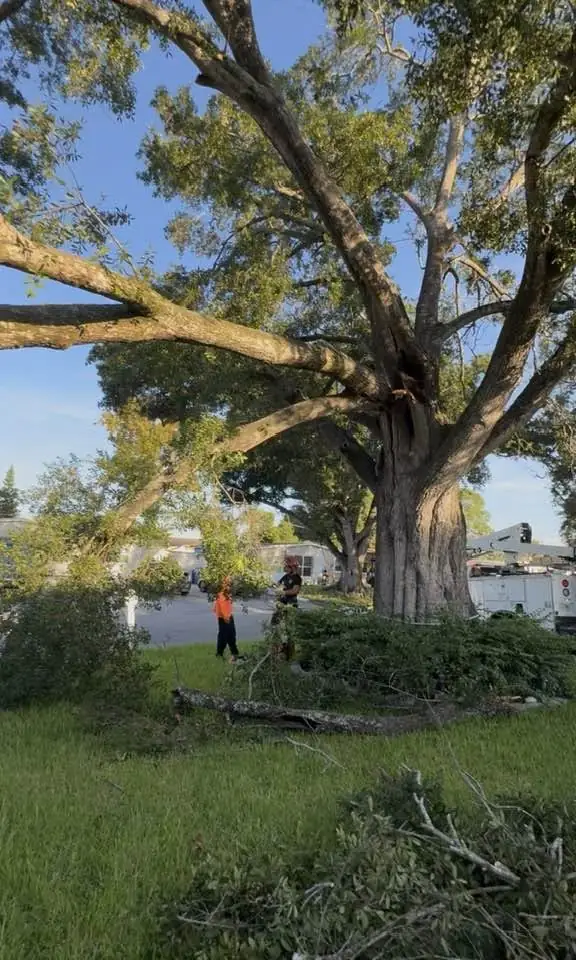
More height and a wider trunk mean more cuts, more rope work and more wood for the crew to load. Height alone still does not set the price. Take two 30-foot trees: a pine standing in open lawn can come down in a few big sections, while an oak leaning over a pool cage has to come apart piece by piece on ropes.
Spread counts as much as height. A live oak with long, low limbs reaching over the roof takes more climbing and more cuts than a straight pine of the same height.
Why does it matter what sits under the tree?
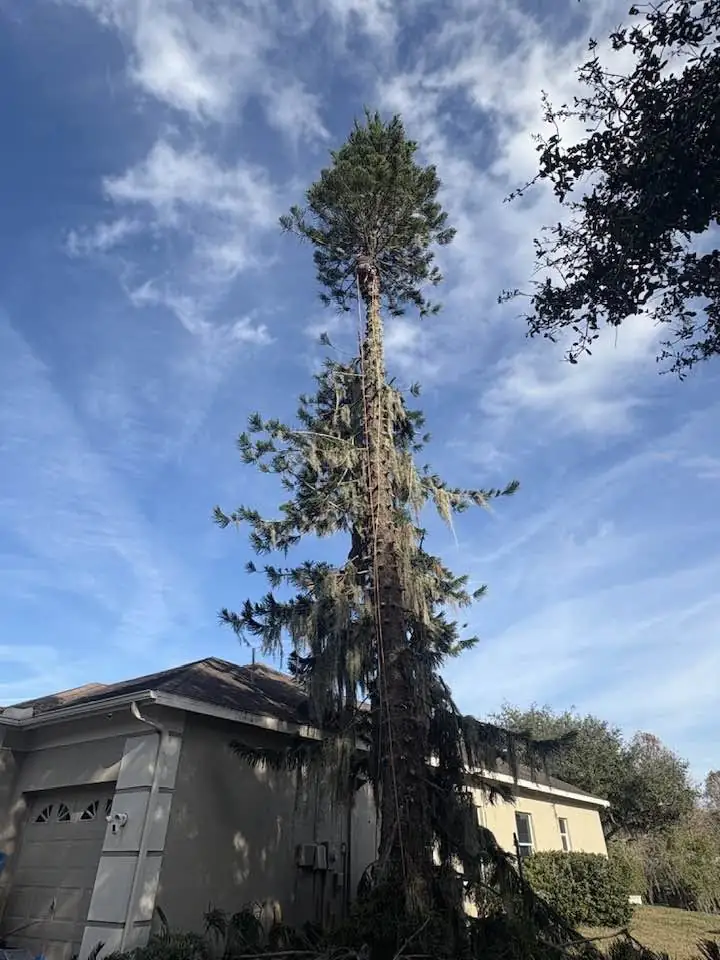
Over open lawn, the crew can cut a tree in sections and let each one fall. When a roof, a pool cage, a fence or a power line sits below, nothing can drop. Each piece comes down on a rope, or a crane lifts it clear, and that takes longer and more hands on the ground to guide every cut.
Does it matter how the crew gets to the tree?
Yes. When a tree stands beside an open driveway, the bucket truck and the loader can park next to it. A backyard tree behind a narrow gate means climbers do the cutting, and the wood leaves by hand or in smaller loads.
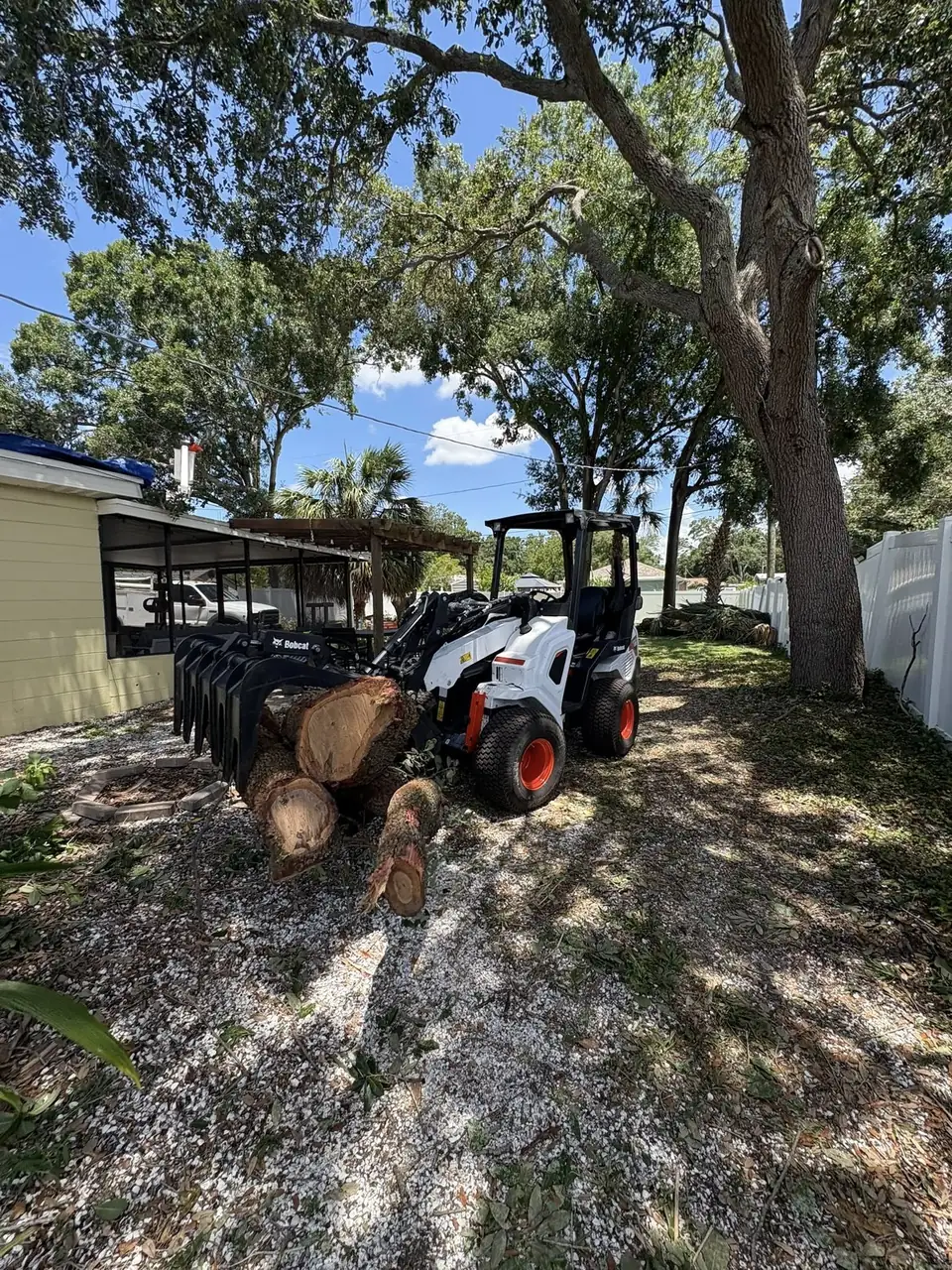
On July 17, 2025, the crew split into two teams for two big removals on two properties. At one of them, a small loader moved the cut log sections across a gravel backyard.
Do dead or hollow trees cost more to take down?
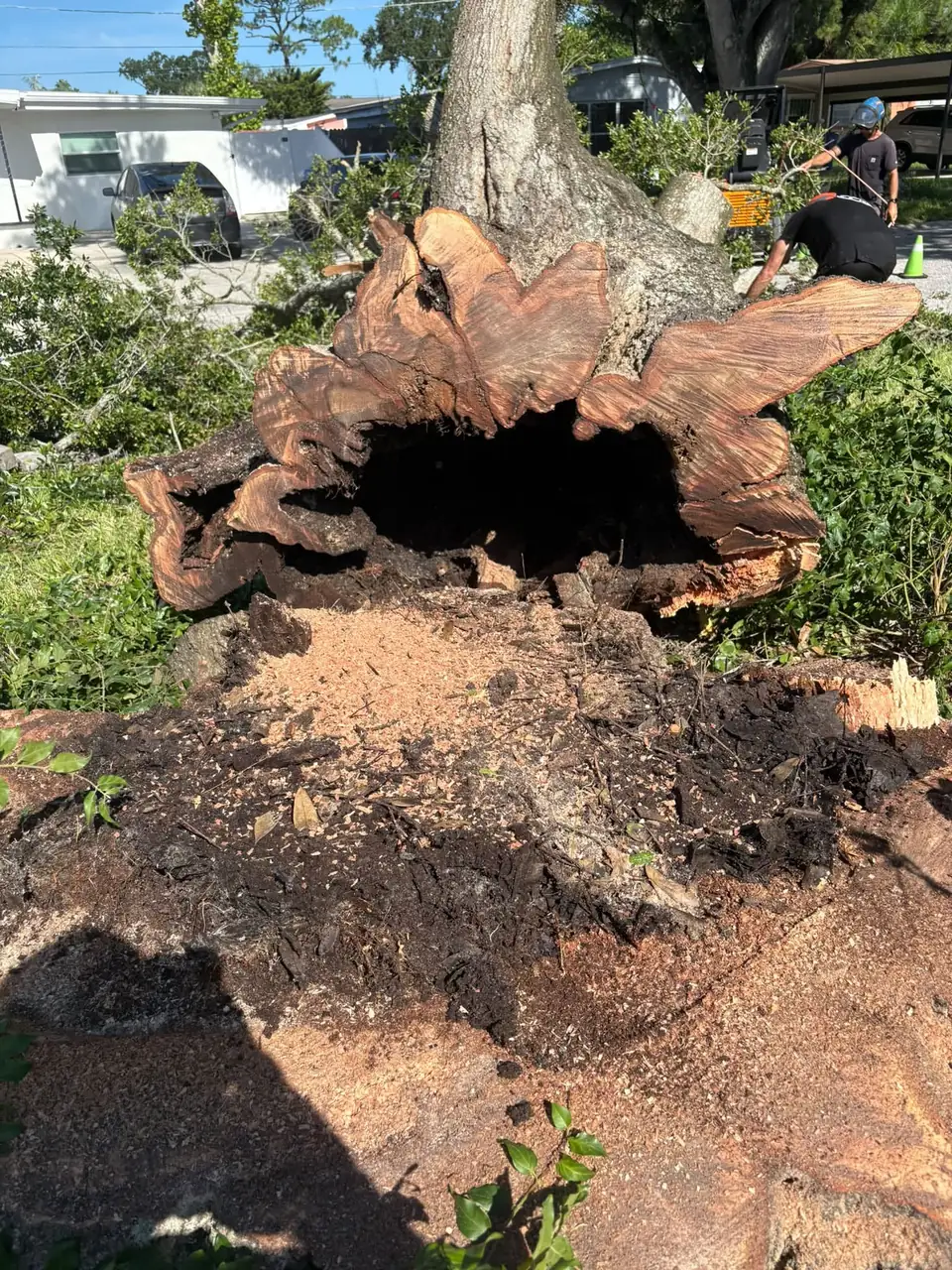
They can. The crew handles dead wood, a hollow trunk or a storm split with more care and cuts it in a set order. A tree already resting on a roof, a fence or another tree needs the same care, because the weight can shift with each cut.
Leaves do not tell the whole story. In August 2026 David posted a tree that looked green and full but was rotten inside; it fell onto a truck. In his words on that post, the free evaluation is there "to help identify hidden concerns before they turn into an emergency."
When is a crane worth the cost?
A crane pays for its setup on big trees over a house, a pool or a fence, where the crew would otherwise rope down every section one limb at a time. It lifts each cut piece over the roof and sets it down on open ground, which also spares the lawn and the beds around the tree.
On a small tree or in an open yard, a crane adds cost and little else. David tells you at the evaluation which way your tree should come down.
What else adds to the bill?
- The stump. Grinding it out below the soil, so you can plant or lay sod over the spot, is work on top of the removal. You can also leave it and decide later. On August 9, 2026, the crew took down a big oak, ground the stump and cleaned up in four and a half hours.
- Several trees. Trees taken down on the same visit share the trucks, the setup and the crew, so each one takes less of the day.
- Hauling it away. Every branch and log leaves with the crew, so no pile waits for you at the curb.
Want a firm number for your tree?
Text David a photo and you'll have it before any work starts. The evaluation is free.
How do permits change the cost in Tampa?
A permit can add a fee and a wait before the work starts. The City of Tampa's tree page protects oaks, pines, elms and other trees once the trunk passes 5 inches across, measured 4.5 feet above the ground. Taking one of those down needs a city permit first, and the city can fine an owner who removes one without it.
In unincorporated Hillsborough County, outside the city limits, you may need a county permit. The county's permit page lists an $81.65 application fee, plus $24.93 an acre on parcels over 5 acres (read November 8, 2026). Staff inspect within 15 business days, and the answer can take up to three and a half weeks. Plant City and Temple Terrace issue their own permits.
Hillsborough County also offers a faster route. With an affidavit from an ISA-certified or ASCA consulting arborist, the county skips its field inspection and issues a result in 5 days. That route is not open for Grand Oaks.
Pasco County, Hernando County and the City of St. Petersburg each write their own tree rules for the rest of the area the crew covers. This is a summary, not legal advice: ask your city or county before you take down a tree it may protect.
How do you get a firm price?
Text photos to (813) 841-8081. David looks at them and gives you a firm number, or comes out to see the tree when the photos leave a question. The evaluation is free either way, and you get the price before any work starts. The tree removal page walks through the job itself, from that first photo to the cleanup.
- The whole tree, top included, taken from across the yard.
- The trunk at the base, close enough to show the bark.
- Whatever sits under the branches: the roof, the pool cage, the fence or the lines.
- The way in: the gate, the driveway or the side yard.
More questions
How can you lower the cost of tree removal?
Have several trees taken down on the same visit, since they share the setup and the crew. Leave the stump for later if you do not need the spot right away. And ask at the free evaluation whether trimming would solve the problem, because some trees can be trimmed instead of removed.
Is the tree evaluation free?
Yes. Whether David reviews your photos or comes out to the yard, the evaluation costs nothing, and you know the price before any work starts.
Sources
- City of Tampa, Tree Information (tree protection, permits and the Florida statute exception). Read .
- Hillsborough County, Apply for a Tree Removal Permit. Read .
- The Florida Senate, Florida Statutes, section 163.045: Tree pruning, trimming, or removal on residential property. Read .
A guide, not legal advice. Rules and fees change; check with your city or county before work starts.