


In this guide
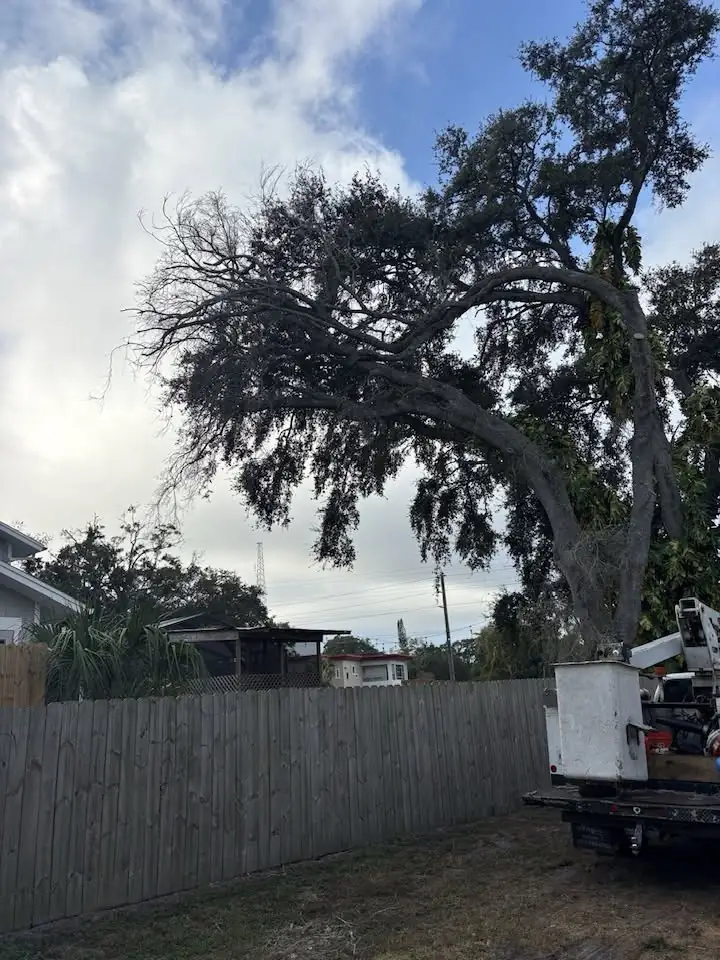
What is a laurel oak?
A laurel oak (Quercus laurifolia) is a large, fast-growing shade tree native to the Southeast, with a dense, oval canopy. The University of Florida says it reaches 60 to 70 feet, can pass 100 feet, and is commonly planted in urban areas because its rapid growth gives plenty of shade in housing developments.
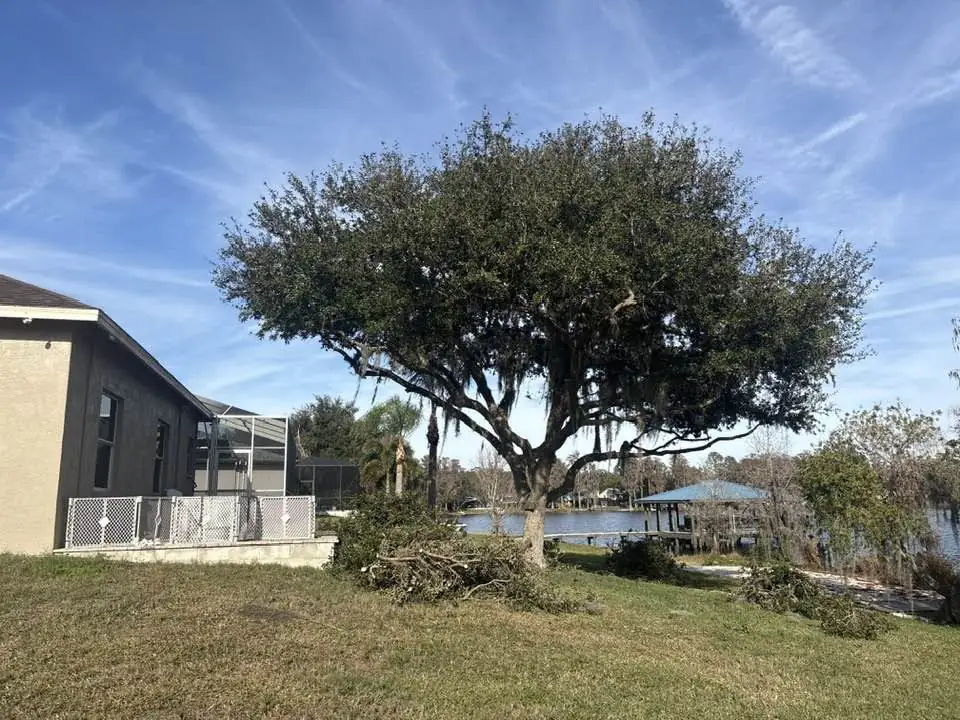
How do you tell a laurel oak from a live oak?
Start with the leaves and the bark. These come from UF/IFAS's fact sheets on laurel oak and southern live oak.
| What to check | Laurel oak | Live oak |
|---|---|---|
| Leaves | 3 to 5 inches, glossy green, often diamond-shaped with smooth, wavy edges | 2 to 5 inches, dark green and glossy on top, oval to narrow |
| Leaf drop | Semi-evergreen to deciduous | Semi-evergreen to evergreen |
| Bark | Dark gray and smooth when young, shallow fissures later | Rough, deeply furrowed and blocky with age |
| Shape | Dense, oval canopy, 35 to 45 feet wide | Broad and spreading, 60 to 120 feet wide |
| Life span | 50 to 70 years in a yard | Can measure its lifetime in centuries |
| Decay | Trunk and big limbs often hollow | More resistant to decay |
Not sure? Take a leaf and a photo of the bark to your county UF/IFAS Extension office.
How long do laurel oaks live in Florida?
UF/IFAS gives a life span of 50 to 70 years. Its guide to hurricane-damaged trees says they live up to about 70 years, and that decay becomes more common as they reach 40. The University of Florida's tree tour lists up to 200 years in nature, so those numbers describe yard trees, and your tree could beat them or fall short.
If your oak was planted when your street was built, the age of the house is a fair first guess at the age of the tree. Compare it with those numbers before you decide how worried to be.
Why do they fail?
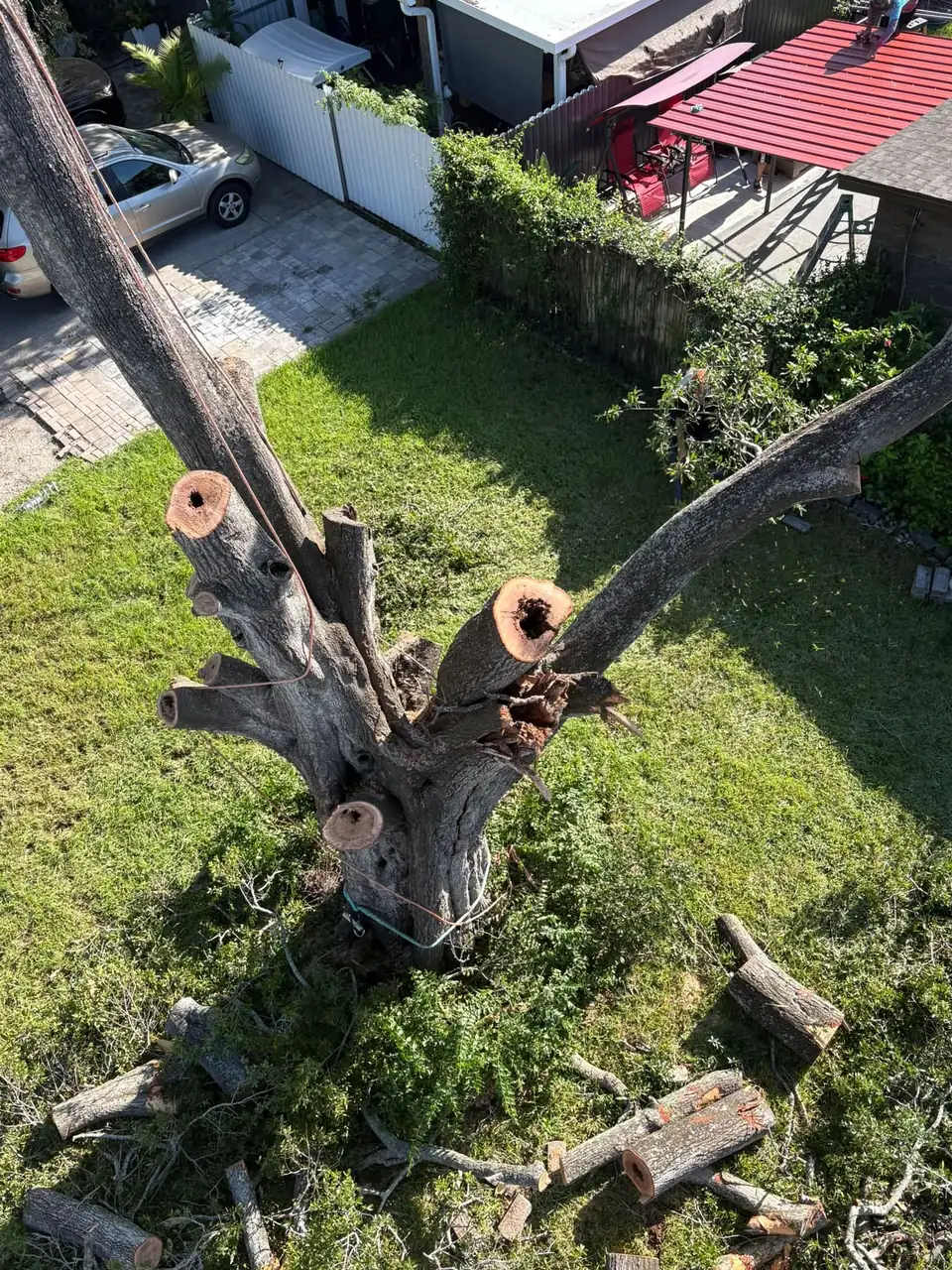
They wall off decay poorly. UF/IFAS's fact sheet says the smallest trunk injury or improper pruning cut can start columns of decay inside the trunk 10, 20 or more feet long. Its hurricane guide names this tree among the poor compartmentalizers: species whose large pruning cuts, trunk injuries and root damage can leave hollows and extensive decay in roots and trunks.
Wind finds that weakness. UF/IFAS's lessons from hurricanes record the town of Bagdad, Florida, replacing these street trees with more wind-resistant, longer-living species such as live oaks.
Is a laurel oak a good tree?
For fast shade, yes, for a limited time. UF/IFAS says it serves well as a street tree but hollows as it approaches 50, and that live, Shumard, southern red and other oaks are more durable. UF/IFAS Gardening Solutions goes further for storm-minded owners and suggests removing trees prone to decay, such as mature laurel oak, and keeping long-lived ones such as live oak and sabal palm. A healthy young one in the right spot has plenty of years left.
Does Tampa protect them?
Yes. Oaks are among the protected trees the City of Tampa names: a permit is required to remove one more than 5 inches across at 4.5 feet up, and pruning a tree 24 inches or more across needs a permit too. In unincorporated Hillsborough County, a home-lot tree generally needs a permit at 12 inches, and special rules apply to oaks of 34 inches or more. The permit guide has the details and the exception for documented dangerous trees.
Should you trim one or take it down?
That depends on how sound the wood is. On a young tree, UF/IFAS recommends pruning regularly so only small branches come off, since big cuts on this species invite decay. On an old one, look for the signs in the guide to dead and dying trees: mushrooms on the roots, cavities, dead limbs high up, a crown thinning at the top.
- Over the house, the driveway or a neighbor's fence, with any of those signs: get it looked at before the next storm.
- Standing clear of everything and sound: it can stay, with regular light pruning.
- Cracked at the lower trunk or leaning toward a target: UF/IFAS lists both as reasons a tree should go.
Want a firm number for your tree?
Text David a photo and you'll have it before any work starts. The evaluation is free.
What should you do about an old one over the house?
Have someone look at it from the ground and in the crown. Text photos to (813) 841-8081: the whole tree, its base and whatever sits under it. The evaluation is free, and David will tell you what he sees and what he would do, with a price before any work starts.
If a tree has to come down, the tree removal page shows how the crew does it. No photo can prove a tree is sound, so treat this guide as a reason to look, never as a verdict on your tree.
More questions
How fast do laurel oaks grow?
Fast. UF/IFAS and the University of Florida both describe it as a fast-growing shade tree, and the university says that rapid growth is why it is so often planted in housing developments. The same sources warn about decay and a shorter life than live oak.
Sources
- UF/IFAS Extension, Quercus laurifolia: Laurel Oak (ENH-707). Read .
- UF/IFAS Extension, Quercus virginiana: Southern Live Oak (ENH-722). Read .
- University of Florida, School of Forest, Fisheries, and Geomatics Sciences, Campus Tree Tour: Laurel oak. Read .
- UF/IFAS Extension, Assessing Hurricane-Damaged Trees and Deciding What to Do (FOR-117). Read .
- UF/IFAS Extension, Wind and Trees: Lessons Learned from Hurricanes (FOR-118). Read .
- UF/IFAS Gardening Solutions, Deciding When to Remove Trees. Read .
- City of Tampa, Tree Information (tree protection, permits and the Florida statute exception). Read .
- Hillsborough County, Development Services FAQs (tree sizes, dead trees, pruning limits, grand oaks). Read .
A guide, not legal advice. Rules and fees change; check with your city or county before work starts.